Which day trading approach works better in 2026 for a beginner with limited screen time
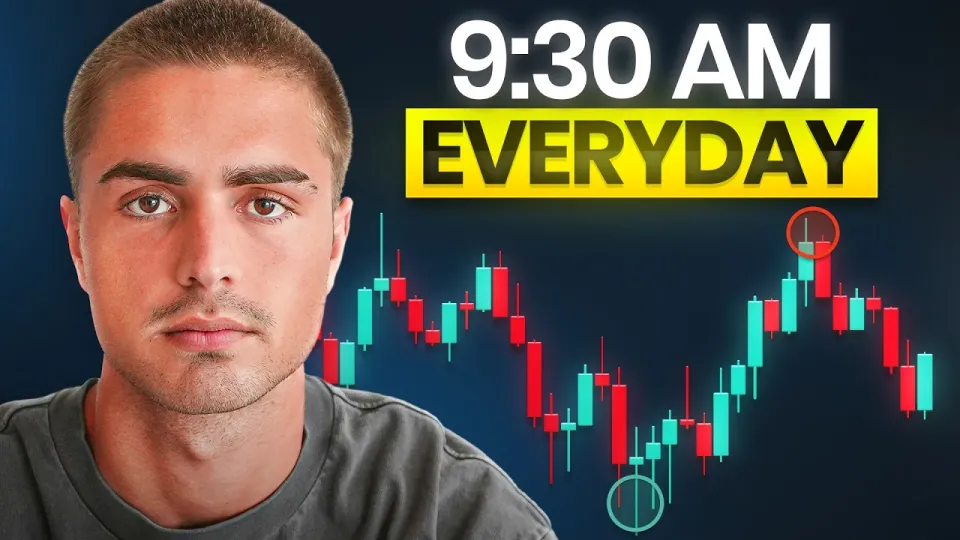
Video: My UPDATED Day Trading Strategy (2026)
Want articles like this for your own video to promote it on YouTube and Google? Order them through the Telegram bot @sat_sit_bot. The bot writes and publishes the articles itself (with your YouTube video embedded) on popular topical websites (no ads). Free trial — 50 articles.
Key takeaways
- TJR's updated framework is built around a small set of markets and one repeatable setup rather than scanning dozens of pairs.
- Confirmation is treated as a level reaction plus structure, not a single candle close — the most-asked question under the video.
- Risk control comes first: a fixed number of trades per session and a hard daily loss limit before any size increase.
- The strategy assumes a funded-account route (Alpha Futures, Lucid Trading, Tradeify) with prop-firm drawdown rules in mind.
- Tradezella journaling and a defined review routine are presented as part of the system, not as optional extras.
Most traders do better with a narrow, rule-based day trading plan than with a wide-open chart hunt: pick one or two markets, one setup, a fixed risk per trade and a hard stop for the session. That is the core of the updated framework TJR walks through, and the full system behind it is available through the TJR Blueprint. The details below explain how the pieces fit together and where beginners usually break them.
What the updated day trading strategy actually changes
The update is less about new indicators and more about removing decisions. TJR's approach concentrates on a small watchlist — typically index futures and a couple of liquid forex pairs — and one repeatable pattern, so the trader spends the session executing instead of searching. Three shifts matter most:
- Narrower market focus. Instead of scanning a long list of instruments, the plan names the markets in advance and ignores everything else, even when a setup looks tempting elsewhere.
- Confirmation before entry. A level alone is not a signal; the trader waits for the market to show a reaction and structure before committing risk.
- Session boundaries. Trading happens in a defined window, with a set number of attempts, after which the platform is closed regardless of results.
Confirmation, level reaction and the question everyone asks
The most common point of confusion under the video is what "wait for confirmation" means in practice — a closed candle or just a reaction at the level. The practical answer is that confirmation is a process with two layers: the level has to be tested, and price has to show it is rejecting that level rather than slicing through it. A single candle close on a low timeframe is weak evidence on its own; a close combined with a clear rejection wick, a failed break, or a shift in short-term structure is far more reliable.
A workable sequence for a beginner:
- Mark the level before the session, not during it.
- Wait for price to reach it and observe the first reaction.
- Require either a rejection close back inside the range or a break-and-retest that holds.
- Enter only if the stop-loss distance still fits the risk budget; if the stop is too wide, skip the trade.
This is why the strategy looks simpler on video than it feels live: the waiting is the hard part, and most losses come from entering before the second layer appears.
Risk rules that keep a small account alive
Position sizing and daily limits decide whether a strategy survives long enough to be evaluated. Day trading is risky and most day traders lose money, so the framework treats risk as a fixed input rather than a feeling. The standard structure is a set percentage or fixed dollar amount per trade, a maximum number of trades per session, and a daily loss limit that ends trading when hit.
For traders using a funded account, the constraint is usually the firm's drawdown rule rather than personal capital. Prop firms such as Alpha Futures, Lucid Trading and Tradeify publish daily loss and trailing drawdown limits, and a strategy that risks a large share of the daily allowance on one idea will fail an evaluation even with a decent win rate. Sizing to a fraction of the daily limit — not to the maximum — is what keeps an account funded through a normal losing streak.
Tools and journaling that support the routine
The system only improves if the results are measured, which is why journaling sits inside the process rather than after it. Tradezella is the journal TJR uses, and the useful fields are simple: instrument, setup type, entry reason, screenshot at entry and exit, result in R multiples, and whether the trade followed the rules. Reviewing twenty tagged trades tells a trader more than a hundred untagged ones.
Indicators play a supporting role. TJR's indicator set is available through the indicator page, and the sensible way to use any add-on is to test whether it improves rule adherence, not whether it makes the chart look cleaner. A funded-account giveaway is also run through the raffle form for traders who want to test the plan on a firm's capital.
Common concerns from traders following the plan
Discipline, not signal quality, is the recurring theme in viewer feedback, and the doubts tend to cluster around a few practical points. One is impatience: the strategy requires long stretches of doing nothing, which feels wrong after watching highlight clips of fast profits. Another is the comparison trap — stories of outsized gains from holding a single volatile asset make a rule-based intraday plan feel slow, even though the risk profiles are not comparable.
A third concern is whether the approach is too simple to work. Simplicity is the point: fewer markets, fewer setups and fewer decisions mean fewer ways to break the rules. The traders who report progress are usually the ones who log every trade and can point to a specific rule they stopped breaking, rather than the ones who keep adding indicators.
Useful links
- Full trader system and blueprint: https://go.tjrtrades.com/blueprint-km5bykx
- Indicators used daily: https://go.tjrtrades.com/indicators-44nwn83
- Funded account raffle entry: https://form.tjrtrades.com/funded-contest
- Alpha Futures (10% off funded accounts): https://app.alpha-futures.com/signup/TJR/
- Lucid Trading (40% off): https://lucidtrading.com/ref/TJR/
- Tradeify (30% off funded accounts): https://tradeify.co/?ref=PBCGEZAG
- Trading journal: https://tradezella.com/?fpr=tjr
- Broker: http://herofx.co/tjr
Final takeaway
A day trading strategy is only as good as the rules a trader actually follows under pressure, and TJR's updated version is built around that idea: one or two markets, a confirmation process instead of a guess, fixed risk and a journal that makes mistakes visible. Beginners get more from mastering that routine than from collecting setups. The channel TJR is the source of this breakdown, and the Blueprint is where the complete system, including entry criteria and risk templates, is laid out for traders who want to work through it step by step.
Source: My UPDATED Day Trading Strategy (2026) · Markdown version
Questions & answers
What does "wait for confirmation" mean in day trading?
It means the level has to be tested and then show rejection or a structural shift before entry. A single low-timeframe candle close is weak evidence on its own; a close with a rejection wick or a failed break is stronger. If the resulting stop is too wide for the risk budget, the trade is skipped.
How many markets should a beginner day trade at once?
One or two liquid markets are enough. A narrow watchlist chosen before the session removes the scanning and second-guessing that causes most rule breaks. Adding instruments only makes sense once the single-setup routine is consistent.
Can this strategy be used on a funded prop account?
Yes, but sizing has to respect the firm's daily loss and trailing drawdown limits rather than the maximum allowance. Risking a large share of the daily limit on one trade can fail an evaluation even with a decent win rate, so sizing to a fraction of the limit is safer.
Is a trading journal really necessary?
It is the only way to know whether the strategy or the execution is the problem. Logging instrument, setup, entry reason, screenshot and result in R multiples lets a trader review twenty tagged trades and find the specific rule being broken.